Last updated: 7 October 2026. Fees and rules checked against the UP Bed & Breakfast and Homestay Policy 2025.
- UP Tourism B&B and Homestay Registration 2025 at a Glance
- Who Can Apply Under the UP Tourism B&B and Homestay Policy 2025?
- Documents Required for UP Tourism B&B and Homestay Registration
- How to Register for UP Tourism B&B and Homestay Online
- Registration Fees, Validity, and Renewal
- What Happens After You Submit the Application?
- Common Mistakes That Delay B&B and Homestay Registration Approval
- Conclusion
- FAQs About UP Tourism B&B and Homestay Registration
UP Tourism homestay registration online: the process in 5 steps
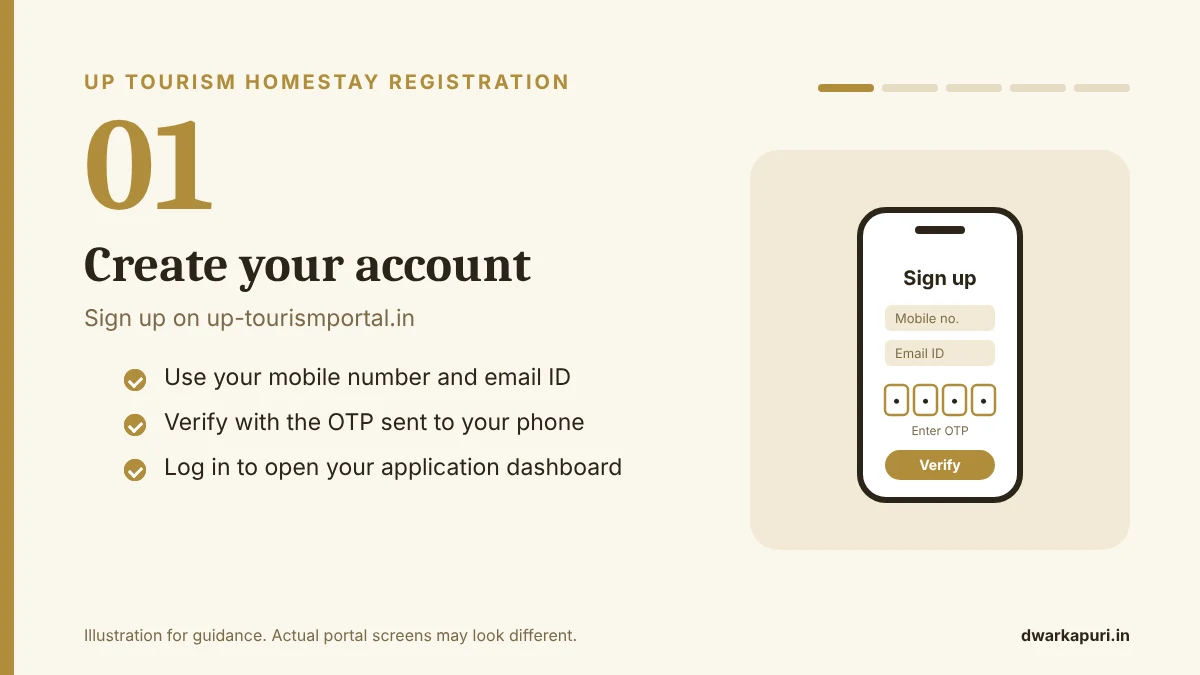
- Create an account on up-tourismportal.in with your mobile number and email ID.
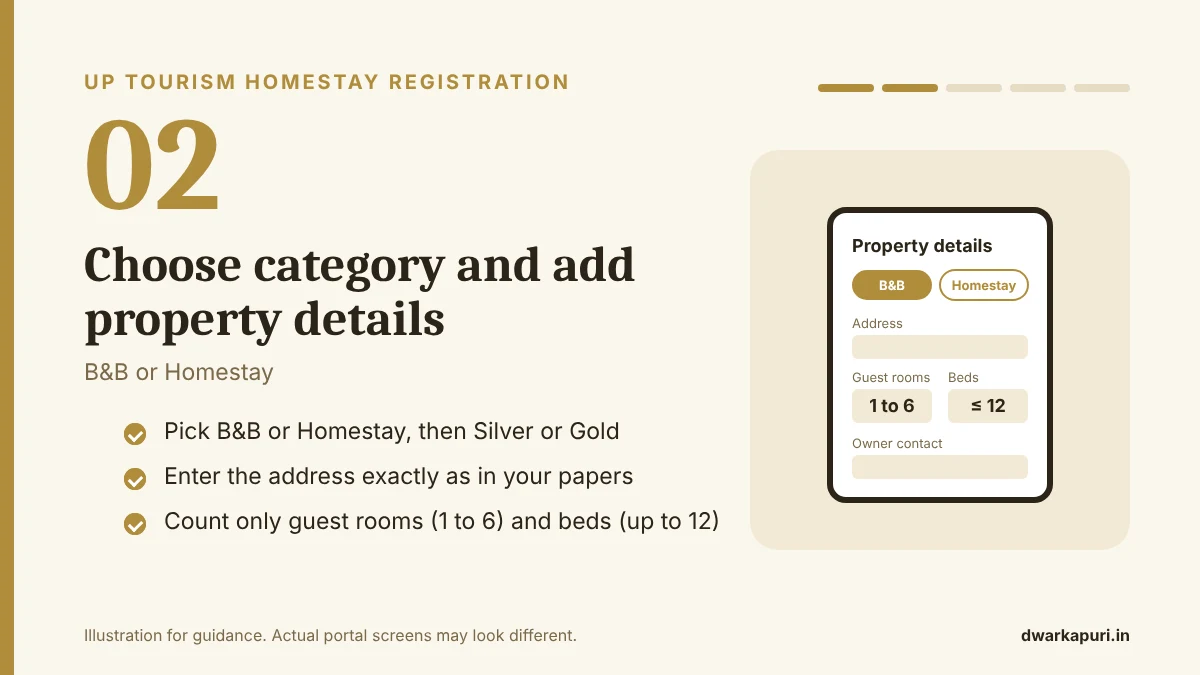
- Choose B&B or Homestay and fill in the property details: address, guest rooms (1 to 6) and beds (up to 12).
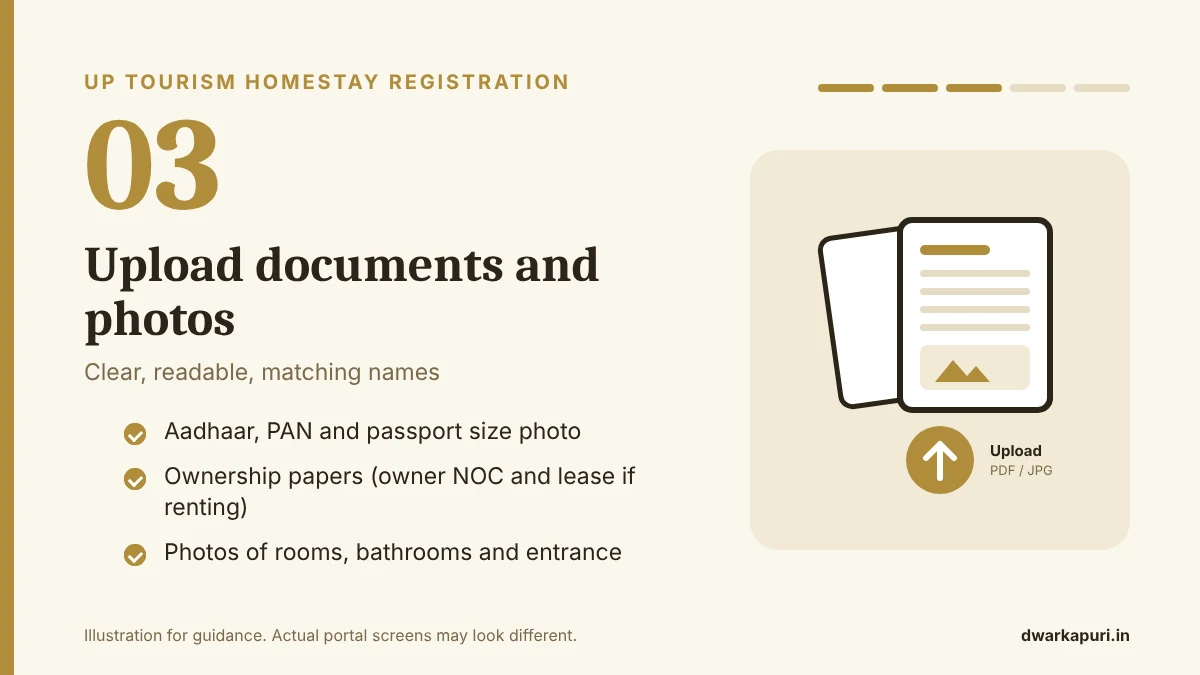
- Upload documents and photos: Aadhaar, PAN, ownership papers, and clear photos of the rooms and bathrooms.
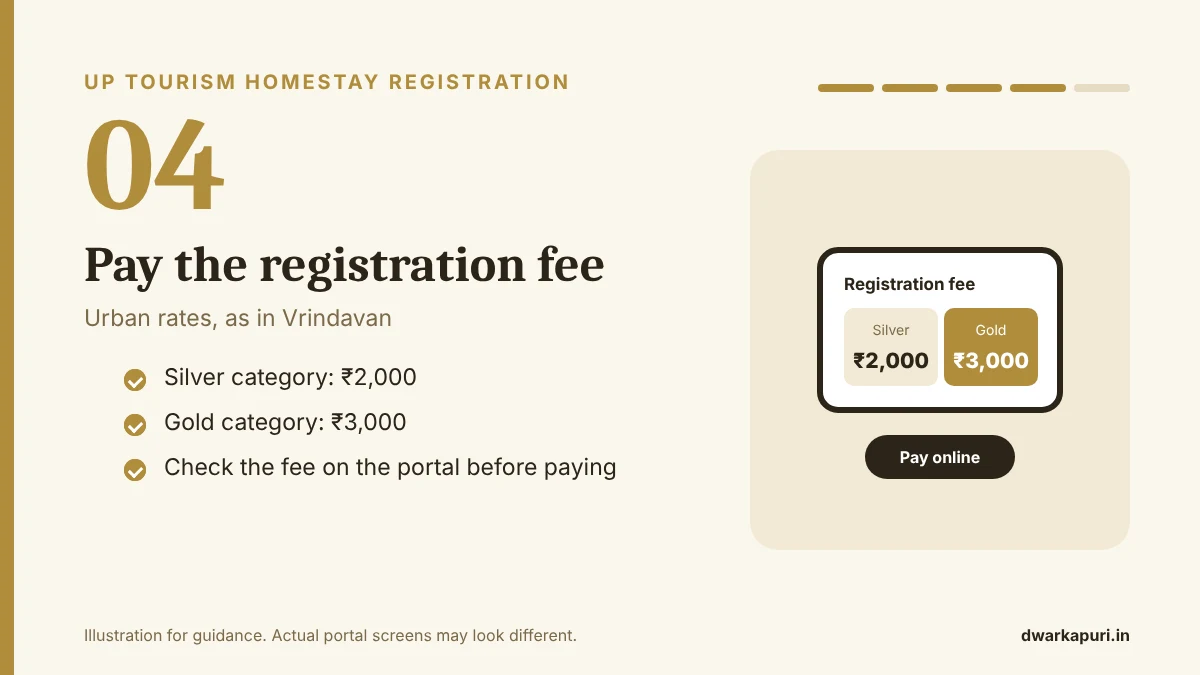
- Pay the fee: ₹2,000 for Silver or ₹3,000 for Gold in urban areas like Vrindavan.
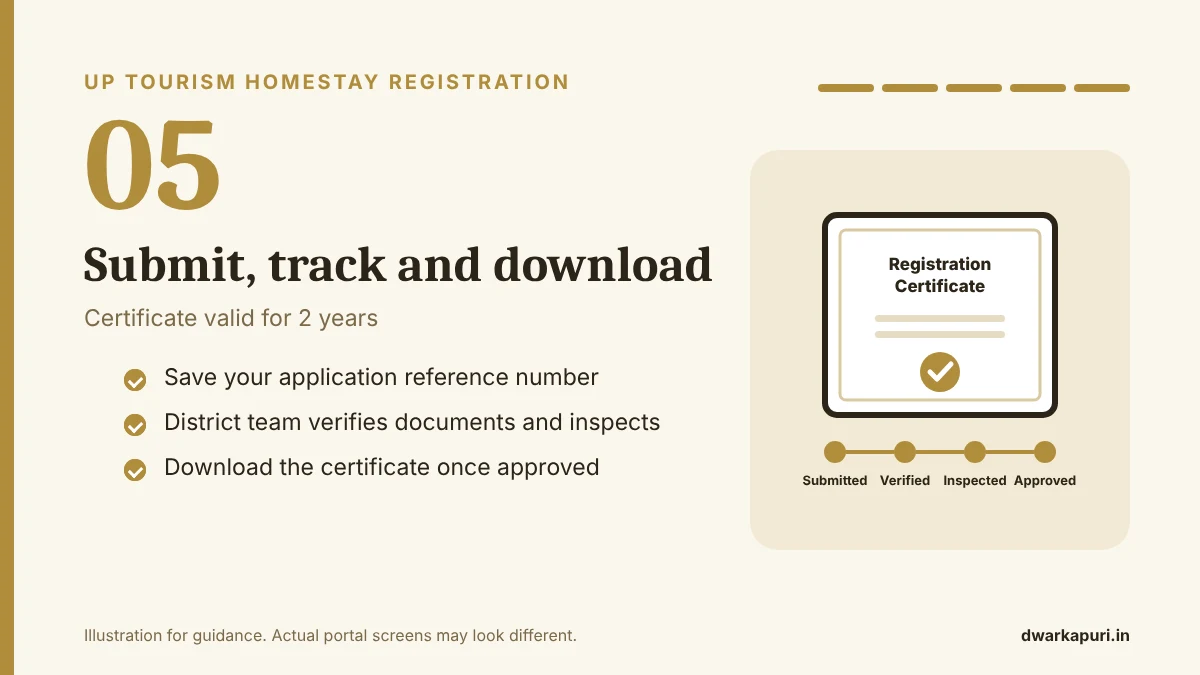
- Submit and track: after verification and inspection by the district team, download your certificate from the portal. It is valid for 2 years.
UP Tourism B&B Homestay Registration is now an essential step for property owners who want to legally operate a Bed & Breakfast or homestay in Vrindavan under the UP Tourism Policy 2025. However, many applicants still struggle with eligibility rules, room limits, required documents, registration fees, and the online application process.
This step-by-step guide explains how to register a B&B homestay under UP Tourism Policy 2025 in Vrindavan. You will learn who can apply, which category to choose, the documents required, registration costs, the complete online process, and common mistakes that can delay approval. Not bought the unit yet? Our studio apartment for sale near Prem Mandir guide helps you shortlist the right property before registration begins.
UP Tourism B&B and Homestay Registration 2025 at a Glance
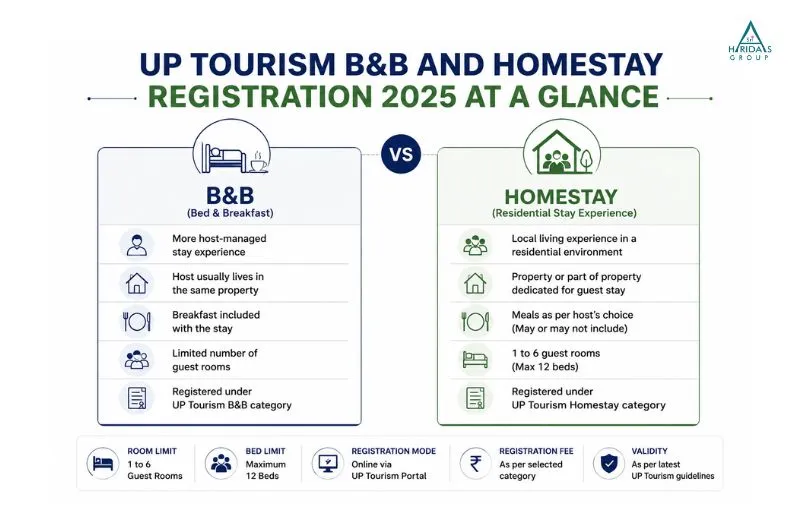
Before you start the registration process, spend a few minutes understanding the basic requirements. Many property owners in Vrindavan focus on the application form first and only later discover issues related to eligibility, room limits, category selection, or missing documents. A quick overview can save time and help you avoid unnecessary delays during verification. If you are still exploring the legal requirements before registration, read our guide on Is Homestay and B&B Legal in Vrindavan.
| Requirement | Details |
| Eligibility | Property owner or authorized applicant meeting policy requirements |
| Registration Mode | Online through the official UP Tourism registration portal |
| Room Limit | 1 to 6 guest rooms |
| Bed Limit | Maximum 12 beds |
| Registration Fee | ₹2,000 (Silver) or ₹3,000 (Gold) for urban areas like Vrindavan |
| Approval Timeline | No fixed number of days in the policy. Depends on document verification and inspection by the district committee. |
| Validity | 2 years, renewable on the same portal |
| Basic Compliance | Property must meet applicable safety and operational requirements |
Quick Summary: UP Tourism allows eligible property owners to register a B&B or homestay with up to 6 guest rooms and 12 beds. Once the application, documents, and property verification are successfully completed, the tourism department issues an official registration certificate under the policy.
B&B vs Homestay: Which Category Should You Choose?
One of the most important decisions during registration is selecting the correct category. While both options come under the same UP Tourism framework, the guest experience and operating style can be different.
Choose the B&B (Bed & Breakfast) category when you plan to personally host guests and provide a more family-managed stay experience. This option is often suitable for homeowners who live on the property and offer a limited number of guest rooms along with basic hospitality services.
Choose the Homestay category when your property is designed to provide a broader accommodation experience while still maintaining the character of a residential home. In Vrindavan, this category is commonly preferred by owners who regularly host pilgrims, families, and long-stay visitors seeking a local living experience.
For example, if you live in your property and occasionally host guests in a few spare rooms, a B&B may be the better fit. However, if a dedicated portion of your property is set up primarily for visitor accommodation, the Homestay category will usually align better with the way the property operates.
Selecting the right category from the beginning makes the registration process smoother and reduces the chances of confusion during verification and inspection. Vrindavan Property Investment Guide (2026): Studio Apartments, B&B Homestays, ROI & Buying Tips
Who Can Apply Under the UP Tourism B&B and Homestay Policy 2025?
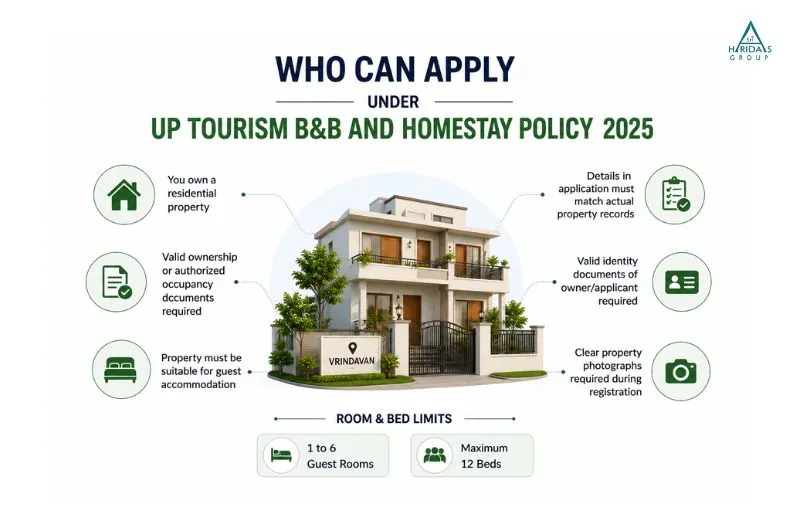
Before investing time and money in the registration process, make sure your property meets the basic eligibility requirements. Many applications get delayed because owners focus on documents first and eligibility later.
Property Ownership Requirements
The UP Tourism B&B and Homestay Policy is designed primarily for residential property owners who want to legally host tourists, pilgrims, and visitors.
You may be eligible to apply if:
- You own a residential house, villa, apartment, or similar property.
- You can provide valid ownership or authorized occupancy documents.
- The property is suitable for guest accommodation.
- The details in your application match the actual property records.
Example: A homeowner in Vrindavan who lives in the property and wants to offer a few rooms to visiting pilgrims can typically apply under the scheme, provided the property meets the policy requirements.
Room and Bed Limits
Before applying, check your guest accommodation capacity carefully.
Under the policy:
- Minimum guest rooms: 1
- Maximum guest rooms: 6
- Maximum bed capacity: 12 beds
Only count the rooms and beds offered to guests.
Example: If your property has 8 rooms but only 4 guest rooms are used for visitors, eligibility is generally assessed based on those 4 guest rooms.
Basic Eligibility Checklist
Before moving to the document stage, make sure you can answer “Yes” to the points below:
- The property meets the ownership requirements.
- Guest accommodation falls within the permitted room and bed limits.
- Required identity and property documents are available.
- Property photographs can be provided during registration.
- The information in the application matches the actual property details.
- The property is ready for verification or inspection, if required.
If you can tick all the points above, you are ready to prepare the documents required for UP Tourism B&B and Homestay Registration.
Documents Required for UP Tourism B&B and Homestay Registration
Before starting the online application, keep all required documents ready in digital format. This can help you complete the registration process faster and avoid interruptions during submission.
Personal Documents
- Aadhaar Card
- PAN Card
- Passport-size Photograph
- Mobile Number
- Email ID
Property Documents
- Property Ownership Proof
- Registry / Sale Deed
- Property Tax Receipt (if applicable)
- Electricity or Water Bill (if applicable)
For rented or leased properties:
- Owner’s NOC (No Objection Certificate)
- Lease / Rent Agreement
Property Photos
Keep clear and recent photographs of:
- Property Front View
- Guest Rooms
- Bathrooms
- Common Areas
- Main Entrance
Complete Document Checklist
| Document | Status |
| Aadhaar Card | ✔ Required |
| PAN Card | ✔ Required |
| Passport-size Photograph | ✔ Required |
| Ownership Documents | ✔ Required |
| Property Tax / Utility Documents | ✔ As Applicable |
| Owner NOC | ✔ For Tenants |
| Lease Agreement | ✔ For Tenants |
| Property Photos | ✔ Required |
Tip: Before uploading any document, make sure the information matches your application details. Even small mismatches can slow down the verification process.
How to Register for UP Tourism B&B and Homestay Online
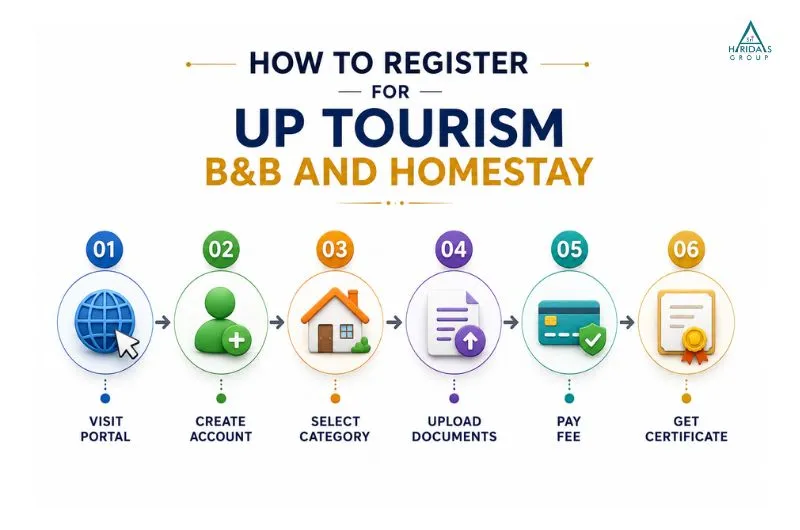
Once your documents are ready, the online registration process becomes much easier. Follow the steps below to submit your application through the UP Tourism registration portal.
Step 1: Visit the Official UP Tourism Portal
Open the official UP Tourism registration portal and access the B&B or Homestay registration section. Keep your mobile number, email ID, and documents ready before you begin.
Step 2: Create Your Account
Register as a new user using your mobile number and email ID. After verification, you will get access to your application dashboard.
Step 3: Select B&B or Homestay Category and Fill Property Details
Choose the category that best matches your property and hosting model.
You will typically need to provide:
- Property name and address
- Number of guest rooms
- Total bed capacity
- Owner and contact details
Example: If you offer 3 guest rooms in your Vrindavan property for visiting pilgrims and families, mention only the rooms available for guests, not the entire house inventory.
Step 4: Upload Required Documents
Upload all required documents and property photographs.
Before uploading, check that:
- Documents are clear and readable
- Names match across all records
- Property details match the application form
Step 5: Pay Registration Fee
After completing the form, proceed to the payment section and pay the applicable registration fee through the available online payment options.
Step 6: Submit Application
Review all information carefully and submit your application. Once submitted, you will receive an application or reference number for future tracking.
Step 7: Track Application Status
Log in to the portal anytime to check your application status. During this stage, your application may go through document verification, inspection, and approval before the registration certificate is issued.
Quick Tip: Before clicking the final submit button, compare the spelling of your name across Aadhaar, PAN, ownership documents, and the application form. Small mismatches can lead to avoidable delays during verification.
Step by Step: Applying on up-tourismportal.in
The five steps below sum up the online application. Keep this page open in one tab while you apply on the official UP Tourism portal in another.
Registration Fees, Validity, and Renewal
Before submitting your application, it is helpful to understand the registration cost, certificate validity, and renewal requirements. This can help you plan and avoid last-minute issues.
Registration Fee
The registration fee depends on the category selected during the application process.
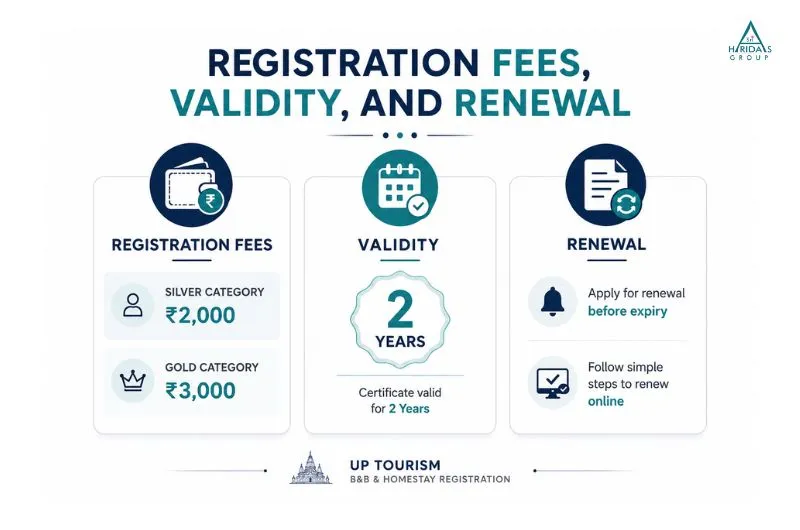
For properties in urban areas such as Vrindavan:
- Silver Category: ₹2,000
- Gold Category: ₹3,000
Always verify the latest fee structure on the official UP Tourism portal before making payment, as government guidelines may change over time.
Certificate Validity
Once approved, your registration certificate remains valid for a fixed period.
- Validity Period: 2 Years
During this period, property owners should continue to comply with the applicable guidelines and maintain accurate registration details.
Renewal Process
Registration is not permanent and must be renewed before the certificate expires.
The renewal process generally involves:
- Logging in to the registration portal
- Reviewing property details
- Updating information, if required
- Uploading any requested documents
- Paying the applicable renewal fee
Quick Tip: Start the renewal process well before the expiry date. This helps avoid delays and ensures your B&B or homestay registration remains active without interruption.
What Happens After You Submit the Application?
Many applicants assume that the process ends after clicking the submit button. In reality, the application goes through a few important stages before the registration certificate is issued.
Document Verification
The first step is document verification.
At this stage, the authorities review the information submitted through the portal and compare it with the uploaded documents.
They typically verify:
- Applicant details
- Property information
- Ownership records
- Supporting documents and photographs
Most delays happen when the information in the application does not match the uploaded records.
Property Inspection
After the document review, the property may be inspected as part of the registration process.
The purpose of the inspection is to confirm that the actual property matches the information provided in the application.
Officials may review:
- Guest rooms and bed capacity
- Property condition
- Guest facilities
- General compliance with registration requirements
For example, if you declared 4 guest rooms during registration, the inspection process may verify that the same setup exists at the property.
Approval Process
Once the verification requirements are completed, the application moves to the approval stage.
During this phase, the authorities review the complete application and determine whether the property meets the registration criteria.
Applications that satisfy the requirements proceed for final approval.
Registration Certificate Issuance
After approval, the registration certificate is issued through the UP Tourism system.
Once available, you can:
- Download the certificate
- Save a copy for future reference
- Keep track of its validity and renewal date
Quick Tip: Most successful applications have one thing in common: the information in the application, property documents, and photographs matches perfectly. Reviewing everything before submission can help avoid unnecessary follow-ups later. For those exploring accommodation and investment options, studio apartment properties in Vrindavan can offer a practical choice.
Common Mistakes That Delay B&B and Homestay Registration Approval
Most registration delays are caused by simple mistakes rather than complex approval issues. Before submitting your application, make sure you avoid the following:
- Entering a name that does not match Aadhaar, PAN, or property documents.
- Uploading unclear, cropped, or unreadable documents.
- Selecting the wrong B&B or Homestay category.
- Providing incorrect room or bed details.
- Uploading outdated or incomplete property photographs.
- Missing required documents such as ownership records or Owner NOC (for tenants).
- Entering property details that do not match supporting documents.
Quick Tip: Before clicking the final submit button, review every document, photograph, and property detail once again. A five-minute review can prevent days of unnecessary delays during verification and approval.
Looking for a flat in Vrindavan to run a homestay?
Dwarka Puri offers MVDA-approved studio apartments on Sunrakh Road, planned with the UP B&B and Homestay Policy 2025 in mind. See the unit sizes, floor-wise rates and payment plans on the Dwarka Puri Vrindavan project page, or request a callback.
Conclusion
UP Tourism B&B and Homestay Registration becomes much easier when you understand the eligibility rules, document requirements, fees, and online application process in advance. A complete and accurate application can help reduce delays during verification and approval.
Whether you are planning to start a B&B or homestay in Vrindavan, following the steps explained in this guide can help you complete your registration with greater confidence and compliance. For more insights on homestays, studio apartments, and hospitality opportunities in Vrindavan, explore Dwarka Puri Vrindavan.
FAQs About UP Tourism B&B and Homestay Registration
How do I apply for UP Tourism homestay registration online?
Create an account on up-tourismportal.in, choose the B&B or Homestay category, fill in the property details, upload your documents and photos, pay the fee and submit. You get a reference number to track the application on the same portal.
What is the difference between a B&B and a homestay under the UP Tourism Policy 2025?
A B&B is generally suited for properties where guests receive a more host-managed stay experience, while a homestay focuses on providing accommodation within a residential environment. The right category depends on how your property operates.
What is the registration fee for a homestay or B&B in Vrindavan?
Vrindavan falls under the urban category. The fee is ₹2,000 for Silver and ₹3,000 for Gold. Rural homestays pay ₹500 (Silver) or ₹750 (Gold). Check the fee shown on the portal before you pay, as the department can revise it.
How many days does homestay registration approval take?
The policy does not fix a number of days. Your application goes through document verification and a property inspection by a district level committee headed by the District Magistrate, with the Superintendent of Police as a member. Applications with matching names, clear documents and correct room counts move fastest.
How long is the registration valid and how do I renew it?
The registration certificate is valid for 2 years. To renew, log in to up-tourismportal.in, review your property details, upload any documents the portal asks for and pay the renewal fee. Start a few weeks before the expiry date so your listing does not lapse.
Is registration mandatory for a homestay in Vrindavan?
Yes. Under the UP Bed & Breakfast and Homestay Policy 2025, every existing and new B&B or homestay had to register with the state tourism department by 9 June 2026. Units running without registration risk penalties and removal from official tourism listings.
What rules apply to a homestay or B&B in Vrindavan?
A registered unit can offer 1 to 6 guest rooms with up to 12 beds. A guest can stay for up to 7 days at a time. You also need police verification, a record of every guest, C-Form reporting for foreign guests and, in an apartment, an NOC from your society or RWA.
What documents are required for UP Tourism B&B and homestay registration?
Applicants usually need identity documents, property ownership records, property photographs, and additional documents such as an Owner NOC and lease agreement for rented properties.
Can tenants apply for B&B or homestay registration with the owner’s permission?
Yes. Tenants may need to submit an Owner NOC (No Objection Certificate) and a valid lease or rent agreement as part of the application process.
Can I list my registered homestay or B&B on Airbnb and other booking platforms?
Yes. Many registered homestays and B&Bs are promoted through platforms such as Airbnb and other online booking websites, subject to platform policies and applicable regulations.